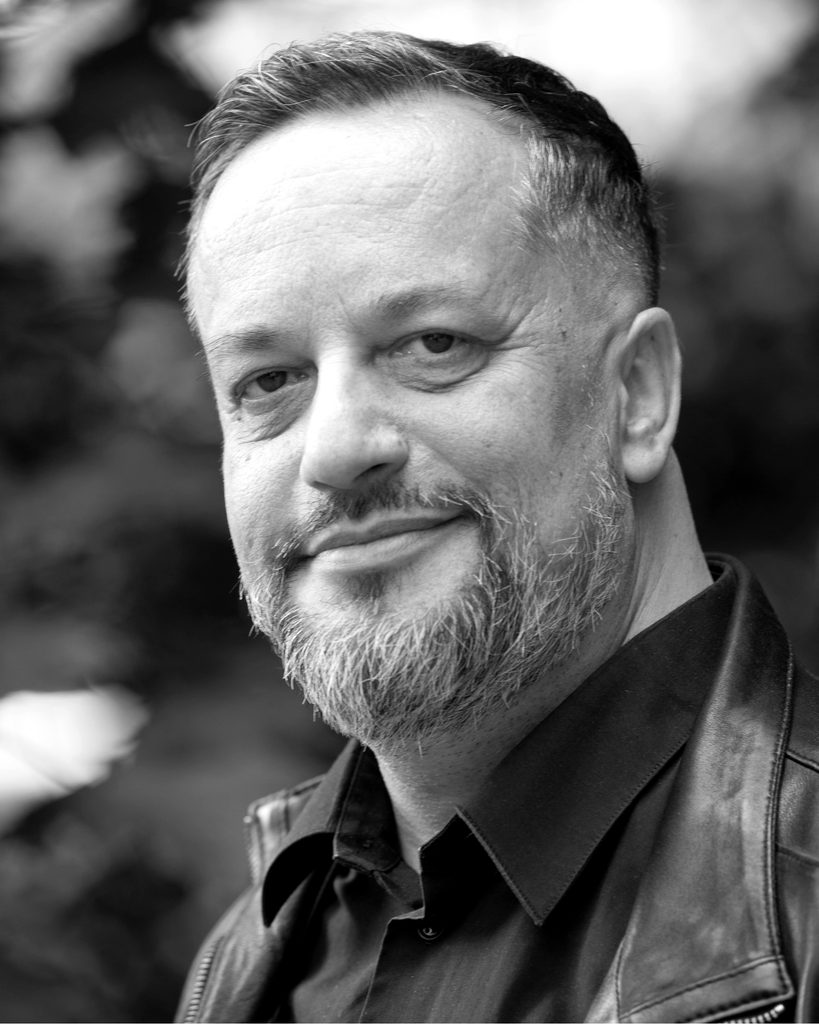
Absolwent V Liceum Ogólnokształcącego im. Augusta Witkowskiego w Krakowie. Studiował na Wydziale Architektury Politechniki Krakowskiej, gdzie uzyskał dyplom z certyfikatem Royal Institute of British Architects (1999). Pracę doktorską obronił na macierzystej uczelni w 2019 roku. Rozprawa pt. „Rola zapomnianych struktur pofortyfikacyjnych w kształtowaniu rozwoju przestrzennego miasta” dotyczyła związków miasta i fortyfikacji na przykładzie dawnych twierdz austriackich: Krakowa, Puli i Trebinje.
Posiada uprawnienia budowlane do projektowania w specjalności architektonicznej bez ograniczeń (nr MPOIA/008/2007) uzyskane w 2007 roku i jest członkiem Małopolskiej Okręgowej Izby Architektów RP (nr ewidencyjny MP-1302). Jest członkiem Towarzystwa Urbanistów Polskich oraz Komitetu Architektury i Urbanistyki Polskiej Akademii Nauk (oddział krakowski), gdzie wygłasza odczyty w ramach sekcji Architecturae Militaris. Od 2013 roku jest członkiem Austriackiego Towarzystwa Badań Fortyfikacji (Österreichische Gesellschaft für Festungsforschung) z siedzibą w Wiedniu.
Posiada ponad 20 lat doświadczenia w praktyce architektonicznej. Do najważniejszych projektów i realizacji należą: Centrum dzielnicy XIV Zugló w Budapeszcie (2006-2009), Centrum Handlowe „Olimpia” w Bełchatowie (2010-2012), przebudowa skrzydła Pałacu Królewskiego w Łobzowie dla Wydziału Architektury PK (2011-2014) oraz projekty rewitalizacji fortów krakowskich, w tym fortu 51 ½ „Swoszowice” (2015), fortu nr 41a „Mydlniki” (2022) i fortu 50 ½ O „Barycz” (2025). Współpracował z samorządami przy tworzeniu szlaków dydaktycznych, m.in. „Szlak Fortyfikacyjny Twierdzy Świnoujście” (2006). Jest laureatem zespołowej nagrody Grand Prix Międzynarodowego Biennale Architektury w Krakowie (2000).
Od 2012 roku zatrudniony jest na Wydziale Architektury Politechniki Krakowskiej, gdzie prowadzi działalność dydaktyczną i badawczą w Katedrze Urbanistyki i Architektury Układów Urbanistycznych A-9. Jego zainteresowania naukowe koncentrują się na morfologii miejskiej, metodologii Space Syntax oraz transformacji struktur pofortyfikacyjnych. Rozwija koncepcję „urbanistyki operacyjnej” jako nowego podejścia do projektowania miast. Jest autorem i współautorem około 30 publikacji naukowych (pełna lista dostępna w portalu CRIS PK: https://cris.pk.edu.pl/info/author/CUTc1148ebdd4634efeb920723d09df62f9/).
Kierował projektami badawczo-rozwojowymi dla Zarządu Budynków Komunalnych w Krakowie, w tym badaniami dostępności architektonicznej przychodni zdrowia (2022) i możliwości instalacji wind w istniejących budynkach mieszkalnych (2025). Brał udział w projektach badawczych: „Model Przestrzennej Struktury Krakowa” na zlecenie Biura Planowania Przestrzennego Urzędu Miasta Krakowa (2017), „Budownictwo efektywne energetycznie i procesowo” na zamówienie Narodowego Centrum Badań i Rozwoju (2021). W 2023 roku uczestniczył w międzynarodowym programie COST CA18137 „European Middle-Class Mass Housing”.
Prezentował badania na konferencjach międzynarodowych, m.in. 14th International Space Syntax Symposium w Nikozji (2024), 29th ISUF International Conference w Turynie (2025).
Od 2019 roku był promotorem 16 prac inżynierskich i 12 prac magisterskich. Prowadzi zajęcia z projektowania architektonicznego i urbanistycznego w języku polskim i angielskim dla studentów I i II stopnia oraz grup Erasmus. Współorganizował międzynarodowe warsztaty projektowe, w tym International Design Workshop z Huazhong University of Science and Technology (2019) oraz warsztaty ECOWEEK w Krakowie (2013). Sprawował opiekę nad pracą nagrodzoną II miejscem w Międzynarodowym Konkursie Drugie Życie Fortu (2019). Pełnił funkcję sekretarza Wydziałowej Komisji ds. Przewodów Doktorskich w zakresie architektury, urbanistyki i planowania przestrzennego.
Filip Suchoń, Ph.D.
A graduate of the August Witkowski Fifth High School in Kraków. He studied at the Faculty of Architecture of Cracow University of Technology, where he obtained his diploma certified by the Royal Institute of British Architects (1999). He defended his doctoral dissertation at his home university in 2019. The dissertation titled „The Role of Forgotten Post-fortification Structures in Shaping the City’s Spatial Development” examined the relationship between cities and fortifications using the examples of former Austrian fortresses: Kraków, Pula, and Trebinje.
He holds an unrestricted architectural design license (No. MPOIA/008/2007), issued in 2007, and is a member of the Małopolska Regional Chamber of Architects (registration No. MP-1302). He is a member of the Society of Polish Town Planners and the Committee on Architecture and Urban Planning of the Polish Academy of Sciences (Kraków branch), where he delivers lectures within the Architecturae Militaris section. Since 2013, he has been a member of the Austrian Society for Fortification Research (Österreichische Gesellschaft für Festungsforschung) based in Vienna.
He has over 20 years of experience in architectural practice. His most significant projects and implementations include: District XIV Zugló Center in Budapest (2006-2009), „Olimpia” Shopping Center in Bełchatów (2010-2012), renovation of the Royal Palace wing in Łobzów for the Faculty of Architecture of Cracow University of Technology (2011-2014), and revitalization projects of Kraków fortresses, including Fort 51 ½ „Swoszowice” (2015), Fort 41a „Mydlniki” (2022), and Fort 50 ½ O „Barycz” (2025). He has collaborated with local authorities in creating educational trails, including the „Fortification Trail of the Świnoujście Fortress” (2006). He is a laureate of the team Grand Prix award at the International Architecture Biennale in Kraków (2000).
Since 2012, he has been employed at the Faculty of Architecture of Cracow University of Technology, where he conducts teaching and research activities in the Department of Urban Planning and Architecture of Urban Structures A-9. His research interests focus on urban morphology, Space Syntax methodology, and the transformation of fortification structures. He is developing the concept of „operational urbanism” as a new approach to urban design. He is the author and co-author of approximately 30 scientific publications (a complete list is available on the CRIS PK portal: https://cris.pk.edu.pl/info/author/CUTc1148ebdd4634efeb920723d09df62f9/).
He has managed research and development projects for the Municipal Buildings Management Board in Kraków, including studies on the architectural accessibility of health clinics (2022) and the feasibility of installing elevators in existing residential buildings (2025). He participated in research projects: „Model of Kraków’s Spatial Structure,” commissioned by the City Planning Office of Kraków (2017), and „Energy and Process Efficient Construction,” commissioned by the National Centre for Research and Development (2021). In 2023, he has been participating in the international program COST CA18137 „European Middle-Class Mass Housing”.
He has presented his research at international conferences, including the 14th International Space Syntax Symposium in Nicosia (2024) and the 29th ISUF International Conference in Turin (2025).
Since 2019, he has supervised 16 engineering theses and 12 master’s theses. He teaches architectural and urban design courses in Polish and English for undergraduate and graduate students, as well as Erasmus groups. He co-organized international design workshops, including the International Design Workshop with Huazhong University of Science and Technology (2019) and ECOWEEK workshops in Kraków (2013). He supervised an entry that was awarded second place in the International Competition „Second Life of the Fort” (2019). He served as secretary of the Faculty Commission for Doctoral Proceedings in architecture, urban planning, and spatial planning.